

Which Simulation Alien Plush Toy Features Matter Most to Buyers?
2026-11-11
A Simulation Alien Plush Toy is more than an ordinary stuffed animal. Combining imaginative extraterrestrial designs with soft fabrics, appealing colors, and comfortable filling, this type of plush toy offers opportunities for gifts, collectibles, themed merchandise, and promotional products. However, choosing the right product involves more than selecting an attractive alien character. Buyers also need to consider fabric quality, shape retention, stitching, filling materials, safety requirements, customization options, and manufacturing consistency.
This guide explores the essential features of Simulation Alien Plush Toys, explains how different design and material decisions influence product quality, and provides practical purchasing advice for retailers, wholesalers, distributors, and custom toy buyers.
1. What Is a Simulation Alien Plush Toy?
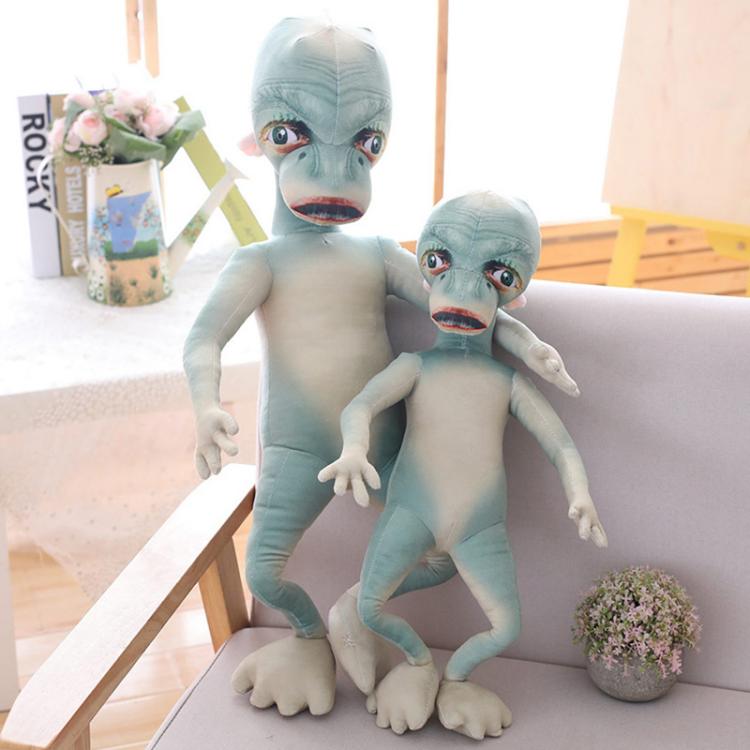
A Simulation Alien Plush Toy is a soft stuffed toy designed to represent an imaginary extraterrestrial character. Its appearance may include a large head, oversized eyes, unusual ears, small arms, distinctive facial expressions, and imaginative body proportions. These characteristics give the toy a recognizable alien appearance while maintaining the softness and comfort expected from a plush product.
Unlike realistic science-fiction models made from plastic, resin, or metal, plush alien toys are designed primarily around tactile comfort and visual appeal. Their soft construction makes them suitable for hugging, displaying, collecting, and giving as gifts.
Depending on the target market, a simulation alien plush toy may feature a cute cartoon-inspired appearance, a futuristic creature design, a colorful fantasy character, or a more detailed extraterrestrial look.
Common Characteristics
- Distinctive facial features: Large embroidered or securely attached eyes, expressive mouths, and unusual facial proportions.
- Soft exterior: Plush fabrics that provide a comfortable surface for touching and holding.
- Flexible body construction: Soft arms, legs, ears, and other character details.
- Imaginative colors: Green, blue, purple, pink, and other eye-catching color combinations.
- Multiple sizes: Compact collectible versions as well as larger decorative or companion plush toys.
For commercial buyers, the product's appeal depends on how effectively its appearance, construction, and intended use work together.
2. What Makes an Alien Plush Toy Visually Appealing?
Design is one of the most important factors influencing whether customers notice and purchase a Simulation Alien Plush Toy. Because alien characters are not limited by real-world animal anatomy, designers have considerable creative freedom. Nevertheless, an effective design should balance originality, recognizable character features, and practical manufacturing requirements.
2.1 Head and Body Proportions
The head is often the most recognizable part of an alien plush character. A slightly oversized head can create a cute, friendly appearance, while an elongated head or unusual body proportions may produce a more futuristic impression.
Proportions should also be considered from a manufacturing perspective. Extremely large heads, thin necks, or unusually long appendages may require additional internal support or reinforced stitching to maintain their shape.
2.2 Eye and Facial Design
Eyes strongly influence the personality of a plush alien. Large oval eyes can create a curious expression, while smaller eyes and a wider mouth may give the character a playful appearance.
Embroidery is a practical option for creating facial details, particularly for products intended for younger children. If plastic eyes or other attached components are used, their attachment strength and suitability for the intended age group should be evaluated.
2.3 Color Selection
Color combinations help distinguish one alien character from another. Green is a familiar extraterrestrial color, while blue and purple can create a fantasy-inspired appearance. Pastel shades may appeal to customers looking for cute decorative gifts.
Color consistency is especially important for bulk orders. Buyers should request a physical sample or approved color reference before mass production.
3. Which Materials Are Suitable for Alien Plush Toys?
Material selection affects softness, appearance, durability, cleaning requirements, and overall product cost. For wholesalers and retailers, the right fabric should match the intended customer group and expected product positioning.
3.1 Short Plush Fabric
Short plush fabric offers a smooth and relatively neat surface. It is suitable for alien toys with clearly defined facial features and body shapes. Its shorter fibers can also make embroidered details easier to display.
3.2 Super Soft Plush Fabric
Super soft plush fabric is commonly selected for products where a smooth, gentle hand feel is a major selling point. It can create a comfortable surface for hugging and handling, making it appropriate for gift-oriented and companion-style toys.
3.3 Velboa Fabric
Velboa is a short-pile fabric frequently used in stuffed toys. It provides a relatively uniform appearance and can be suitable for character designs requiring clear shapes and detailed surface construction.
3.4 Minky Fabric
Minky fabric is known for its soft, plush texture. Depending on the specific fabric construction, it may be used for toys designed to emphasize a cozy, premium feel.
| Material | Main Characteristics | Suitable Applications |
|---|---|---|
| Short Plush | Smooth surface and clear appearance | Character toys and detailed designs |
| Super Soft Plush | Soft hand feel and comfortable texture | Huggable plush toys and gifts |
| Velboa | Short pile and uniform surface | Structured character designs |
| Minky | Soft and cozy texture | Premium-feel plush products |
When evaluating fabrics, buyers should examine fiber shedding, color consistency, surface defects, seam performance, and care instructions. Fabric selection should also be confirmed against the applicable safety and chemical requirements of the destination market.
4. How Does Filling Affect Comfort and Shape?
The filling material determines much of a plush toy's softness, weight, resilience, and ability to maintain its original shape. Even when two alien toys use similar exterior fabrics, differences in filling quality can create noticeably different customer experiences.
Polyester Fiber Filling
Polyester fiberfill is widely used in stuffed toys because it is lightweight and can provide a soft, flexible structure. Its distribution throughout the body affects whether the toy feels evenly filled or develops empty spaces.
For a Simulation Alien Plush Toy, consistent filling is particularly important around the head, neck, arms, and other areas where the character's proportions need to remain recognizable.
Filling Density and Shape Retention
Filling density should match the design. A toy that is too loosely filled may look flat or lose its intended silhouette. Excessively dense filling can make it feel stiff and reduce its softness.
During sample evaluation, buyers should check:
- Whether the head maintains its intended shape.
- Whether the body feels evenly filled.
- Whether the arms and legs are adequately supported.
- Whether the toy returns to its approximate shape after gentle compression.
- Whether any filling material escapes through seams.
A well-balanced combination of fabric and filling helps create a product that looks attractive and feels comfortable during repeated handling.
5. How Are Simulation Alien Plush Toys Manufactured?
Manufacturing a quality alien plush toy requires coordination between design development, material preparation, sewing, filling, finishing, and inspection. Each stage contributes to the final appearance and product consistency.
Step 1: Character Design and Pattern Development
The process begins with a design concept. Designers determine the character's proportions, facial expression, colors, dimensions, and special details. The concept is then translated into patterns that define how individual fabric pieces will fit together.
Step 2: Fabric Selection and Cutting
After the materials are approved, fabric is prepared and cut according to the production patterns. Accurate cutting helps prevent mismatched components and uneven shapes during assembly.
Step 3: Embroidery and Detail Application
Facial features, decorative patterns, and other character details are added through embroidery, printing, or suitable attachments. Their positioning should be checked against the approved sample.
Step 4: Sewing and Assembly
The cut fabric components are stitched together to form the head, body, limbs, and other sections. Consistent seam allowances and careful alignment are essential for maintaining the intended appearance.
Step 5: Filling and Shaping
Polyester fiber filling or another approved filling material is inserted into the assembled structure. Workers distribute the filling evenly and shape the toy to achieve the desired proportions.
Step 6: Finishing and Quality Inspection
Loose threads are removed, seams and attached details are checked, and the finished toy is inspected for visual and construction defects. Products are then prepared for the agreed packaging and shipping arrangements.
6. Which Quality Factors Should Buyers Check?
For importers, distributors, and retailers, product quality directly affects customer satisfaction, return rates, and brand reputation. A visually attractive sample is not enough; buyers should also examine construction and consistency.
6.1 Stitching and Seam Strength
Inspect the main seams, especially around the neck, shoulders, arms, legs, and other stress points. Stitching should be reasonably uniform, with no obvious gaps, loose threads, or exposed filling.
6.2 Fabric Performance
Check whether the fabric feels consistent across different parts of the toy. Look for excessive shedding, discoloration, stains, uneven pile, or noticeable surface defects.
6.3 Attached Components
Eyes, decorative elements, buttons, and other accessories should be assessed according to the product's intended age group. Small detachable components may create choking hazards for young children.
6.4 Shape and Dimensional Consistency
Compare the finished product with the approved sample. Pay attention to overall height, width, facial positioning, body proportions, and filling distribution.
6.5 Applicable Safety Requirements
Safety requirements depend on the intended market, product classification, and target age group. Buyers should identify applicable regulations before ordering and request relevant test reports or supporting documentation where necessary.
For example, toys marketed in the United States may need to meet applicable requirements under the Consumer Product Safety Improvement Act (CPSIA), relevant ASTM F963 provisions, and applicable CPSC rules. Products sold in the European Union must be assessed against the applicable toy safety legislation and conformity requirements.
Buyers should not assume that one certificate automatically covers every market, product design, or material combination. Requirements should be verified for the actual product being purchased.
7. Where Can Alien Plush Toys Be Used?
The imaginative appearance of Simulation Alien Plush Toys makes them suitable for several commercial and personal applications. Their flexibility allows businesses to target different customer segments through variations in size, character design, packaging, and customization.
7.1 Gift Shops and Retail Stores
Alien plush toys can be offered as novelty gifts, birthday presents, holiday merchandise, and decorative products. Their unusual appearance can help create visual interest in retail displays.
7.2 Collectible Merchandise
Distinctive characters, limited color editions, and themed collections can appeal to customers who enjoy collecting imaginative plush products. Businesses can introduce coordinated character series to encourage repeat purchases.
7.3 Promotional Products
Companies can develop custom alien characters for promotional campaigns, brand activities, exhibitions, and special events. Custom colors, embroidered logos, and branded packaging can help connect the product with a business identity.
7.4 Children's Gift Products
Friendly alien characters with soft materials and appropriate construction can be positioned as children's gifts. Product age grading, component safety, and applicable toy testing requirements should always be considered.
7.5 Themed Decorations
Science-fiction events, space-themed parties, entertainment displays, and novelty merchandise collections can all provide potential applications for alien-inspired plush products.
8. How Can Businesses Customize Alien Plush Toys?
Customization allows buyers to create products that better match their market positioning, customer preferences, and brand identity. Rather than relying exclusively on standard designs, businesses can work with suppliers to develop a more distinctive product.
Custom Character Appearance
Buyers can provide sketches, reference images, or design specifications to communicate the intended alien character. Important details include head proportions, eye shape, facial expression, body structure, and decorative elements.
Custom Colors and Fabrics
Different fabric textures and color combinations can change the overall personality of a plush toy. Businesses may request particular shades, contrasting body parts, or special surface materials.
Size and Shape Adjustments
Product dimensions should reflect the intended sales channel. Smaller products may be suitable for compact gift assortments, while larger versions can be developed for display and decorative purposes.
Logo and Packaging Customization
Custom labels, hang tags, packaging inserts, and branded boxes can help businesses create a consistent presentation. Buyers should confirm printing methods, artwork specifications, packaging dimensions, and labeling requirements before production.
What Information Should Buyers Provide?
- Reference images or character design drawings.
- Target product dimensions and estimated weight.
- Preferred fabric type and color references.
- Filling preferences and desired softness.
- Embroidery, printing, or accessory requirements.
- Estimated order quantity and delivery destination.
- Intended customer age group and target market.
- Packaging and labeling specifications.
Providing clear specifications at the beginning of the project helps reduce repeated revisions and makes it easier to evaluate production feasibility.
9. How Should Buyers Choose a Reliable Supplier?
Choosing a suitable supplier is an important decision for businesses purchasing Simulation Alien Plush Toys in bulk or developing customized products. Price is important, but it should not be the only factor in a sourcing decision.
Evaluate Product Development Capabilities
Ask whether the supplier can work with reference images, develop samples, adjust patterns, and handle custom character details. A supplier's ability to understand design requirements can make the development process more efficient.
Review Material and Production Information
Request clear information about fabric composition, filling materials, construction methods, and available quality inspection procedures. Transparent specifications make supplier comparisons more meaningful.
Request a Pre-Production Sample
A sample allows buyers to examine the actual material, dimensions, softness, stitching, and overall appearance before committing to a larger order. Important sample revisions should be agreed upon in writing.
Confirm Minimum Order Quantity and Lead Time
Minimum order quantities, sample development time, production schedules, and shipping arrangements can vary between suppliers. Buyers should confirm these details before placing an order.
Clarify Quality Control and After-Sales Arrangements
Discuss how production defects are handled, what inspection standards apply, and how discrepancies between approved samples and delivered products will be addressed.
| Evaluation Factor | Questions to Ask | Why It Matters |
|---|---|---|
| Design Capability | Can the supplier develop custom characters? | Supports product differentiation |
| Material Quality | What fabrics and fillings are available? | Influences feel and durability |
| Sampling | Can a pre-production sample be provided? | Reduces specification uncertainty |
| Production | What are the MOQ and lead time? | Supports purchasing and inventory planning |
| Quality Control | What inspections are performed? | Helps maintain product consistency |
| Compliance | Can applicable testing documents be provided? | Supports destination-market requirements |
For wholesalers and importers, a reliable sourcing relationship should be based on clear communication, realistic production commitments, documented specifications, and consistent product quality.
10. How Can Alien Plush Toys Be Maintained?
Proper care helps preserve a plush toy's appearance, softness, and structural condition. Cleaning instructions should always follow the manufacturer's care label and the characteristics of the actual fabric and accessories.
Regular Surface Cleaning
For light dirt or dust, gently wipe the surface with a clean, slightly damp cloth. Avoid excessive rubbing, especially around embroidered details and decorative components.
Washing Considerations
Some plush toys may be suitable for gentle hand washing or machine washing, while others require surface cleaning only. Check whether attached accessories, electronic components, or special fabrics limit washing options.
Drying and Storage
Allow cleaned toys to dry thoroughly according to the care instructions. Store them in a clean, dry environment away from excessive moisture, direct heat, and prolonged sunlight.
Retail and Warehouse Storage
For commercial inventory, use clean packaging and avoid excessive compression during storage. Appropriate packaging helps protect the product from dust, moisture, and unnecessary deformation before delivery.
11. Frequently Asked Questions
Q1: What is a Simulation Alien Plush Toy?
A Simulation Alien Plush Toy is a soft stuffed character designed with imaginative extraterrestrial features. It may include oversized eyes, unusual facial expressions, distinctive body proportions, and colorful plush fabrics.
Q2: What materials are commonly used in alien plush toys?
Common materials include short plush, super soft plush, Velboa, and Minky fabrics. Polyester fiberfill is frequently used as an interior filling material to provide softness and shape.
Q3: Can Simulation Alien Plush Toys be customized?
Customization may include character appearance, fabric, color, dimensions, embroidery, accessories, labels, and packaging. The available options depend on the supplier's capabilities and the project's production requirements.
Q4: Are alien plush toys suitable for children?
They can be designed for children, provided the finished product meets the applicable safety requirements for its intended age group and destination market. Small detachable components and other potential hazards should be carefully evaluated.
Q5: What filling is best for a soft alien plush toy?
Polyester fiberfill is a common choice because it is lightweight and can provide a soft, flexible structure. The appropriate filling density depends on the character design, dimensions, and desired hand feel.
Q6: How can buyers ensure consistent product quality?
Buyers should approve a detailed sample, confirm fabric and filling specifications, establish inspection criteria, and compare bulk production with the approved sample. Clear written requirements help reduce misunderstandings.
Q7: What should importers consider before ordering in bulk?
Important considerations include MOQ, unit pricing, sampling costs, production lead time, packaging, shipping arrangements, quality control, and applicable product safety documentation.
Q8: Can alien plush toys be used as promotional gifts?
Yes. Businesses can develop custom alien characters with branded colors, embroidered logos, labels, and packaging for promotional campaigns, exhibitions, corporate gifts, and themed marketing activities.
Q9: How should plush toys be packaged for international shipping?
Packaging should protect the toys from dust, moisture, and handling damage. The appropriate packaging method depends on product dimensions, shipping conditions, material characteristics, and the buyer's retail presentation requirements.
Q10: What information is needed to request a custom quotation?
Buyers should provide product reference images, target dimensions, preferred materials, order quantity, customization requirements, packaging details, and delivery destination. These details help suppliers prepare a more accurate quotation.
Conclusion
A well-designed Simulation Alien Plush Toy combines imaginative character development with suitable materials, comfortable filling, reliable stitching, and consistent finishing. For consumers, these features create an appealing and enjoyable plush product. For wholesalers, retailers, and distributors, they provide a foundation for developing products that meet specific market expectations.
Successful purchasing begins with understanding the target customer, defining product specifications, evaluating samples, and confirming quality requirements before mass production. Whether the goal is to source ready-made alien plush toys or develop a customized character collection, careful supplier evaluation can help reduce purchasing risks and improve the final product.
Looking for a Simulation Alien Plush Toy Supplier?
Baoding Yishengda Trading Co., Ltd is ready to discuss your plush toy sourcing and customization requirements. Whether you are developing a new character, sourcing products for retail, or planning a bulk purchasing project, clear product specifications are the first step toward finding a suitable solution.
Share your design references, preferred materials, target dimensions, and estimated order quantity with our team.
Contact us today to discuss your Simulation Alien Plush Toy project and explore product options for your business.