

What materials make the best Doughnut Shaped Swimming Ring for both pool and beach conditions
2026-05-20
When choosing a Doughnut Shaped Swimming Ring that performs well in pools and on sandy beaches, material quality is the deciding factor. The best option balances durability, comfort, and resistance to sun, salt, and chlorine. Yongxin has developed a range of Doughnut Shaped Swimming Ring products using advanced polymer blends that meet these demands.
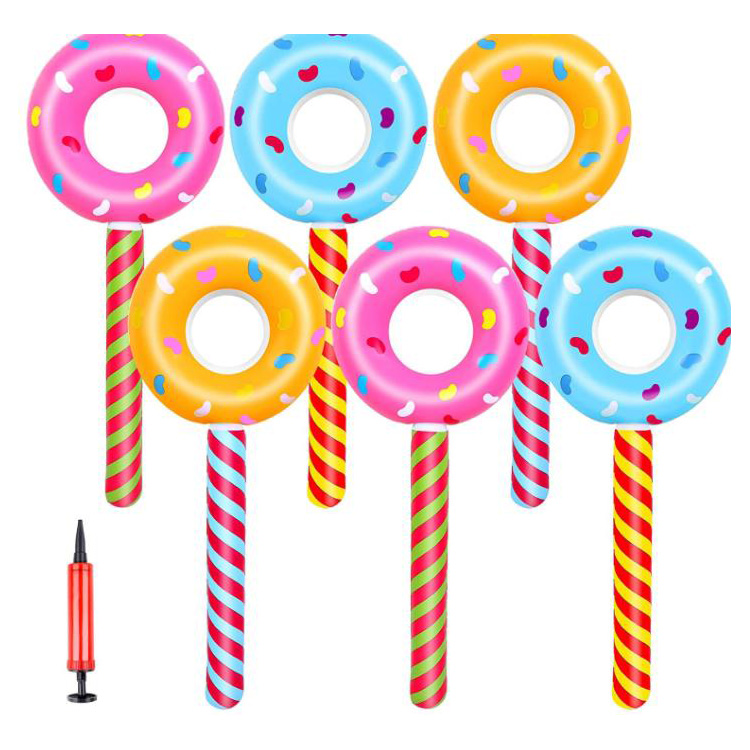
The table below compares common materials used in Doughnut Shaped Swimming Ring manufacturing.
| Material | Pool Performance | Beach Performance | Durability | UV Resistance |
|---|---|---|---|---|
| Standard PVC | Good | Fair | Moderate | Low |
| Heavy-duty Vinyl | Very Good | Good | High | Medium |
| Phthalate-free PVC | Excellent | Excellent | High | High |
| Rubber-coated fabric | Good | Very Good | High | Medium |
| Yongxin proprietary composite | Excellent | Excellent | Very High | Very High |
For both pool and beach conditions, phthalate-free PVC and Yongxin composite materials rank highest. Standard PVC degrades quickly under sunlight and cracks after contact with saltwater. Heavy-duty vinyl handles pool chlorine well but loses flexibility on hot sand. Rubber-coated fabric offers good abrasion resistance but absorbs water, making the ring heavy to carry.
A high-quality Doughnut Shaped Swimming Ring should also feature welded seams rather than glued seams. Welded seams prevent air leaks when the ring is dragged across rough surfaces like beach pebbles or pool decks. Yongxin rings use radio-frequency welding, which creates molecular bonds between material layers.
Doughnut Shaped Swimming Ring FAQ
Q1: Can I use the same Doughnut Shaped Swimming Ring in a chlorinated pool and the ocean without damaging it?
Yes, but only if the ring is made from UV-stabilized and chlorine-resistant materials. Standard PVC rings degrade within weeks of mixed use. Yongxin designs its Doughnut Shaped Swimming Ring with a special additive package that resists both chemical attack from chlorine and UV breakdown from sun exposure. After each saltwater use, rinse the ring with fresh water to remove salt crystals that can abrade the surface. For pool use, avoid leaving the ring on the pool deck in direct sun for extended periods.
Q2: How do I know if the material of my Doughnut Shaped Swimming Ring will last more than one season?
Check the material specification. A durable Doughnut Shaped Swimming Ring should have a thickness of at least 0.25mm for lightweight models and 0.35mm or more for heavy-duty use. Look for the term "phthalate-free" and "UV8" or "UV-stabilized" on the packaging. Yongxin rings include a material grade label showing tensile strength (minimum 2800 psi) and elongation at break (over 250%). Brands that hide material specifications often use recycled or low-grade PVC that fails after 30-50 hours of combined pool and beach use.
Q3: What is the most common failure point on a Doughnut Shaped Swimming Ring made for mixed conditions?
The seam and the valve base are the two most common failure points. On beaches, sand gets trapped between the outer layer and the inner air chamber, causing micro-tears at welded seams. Yongxin solves this with a double-welded seam design and a recessed valve protected by a sand-resistant flap. Low-quality rings use single glued seams that separate under temperature changes—hot sand expands the air inside, and cool pool water contracts it, stressing the glue repeatedly. Always choose welded seams and a flush-mounted valve.
Contact Us
For more technical specifications or to request samples of Yongxin Doughnut Shaped Swimming Ring models suitable for both pool and beach environments, please contact our product team directly via the email form on our website or call our customer support line during business hours. We provide OEM material testing reports and custom thickness options for bulk orders.