
What Happens If One Time Use RFID Disposable Paper Sports Bracelet Wristbands Get Wet from Sweat or Rain
2026-08-07
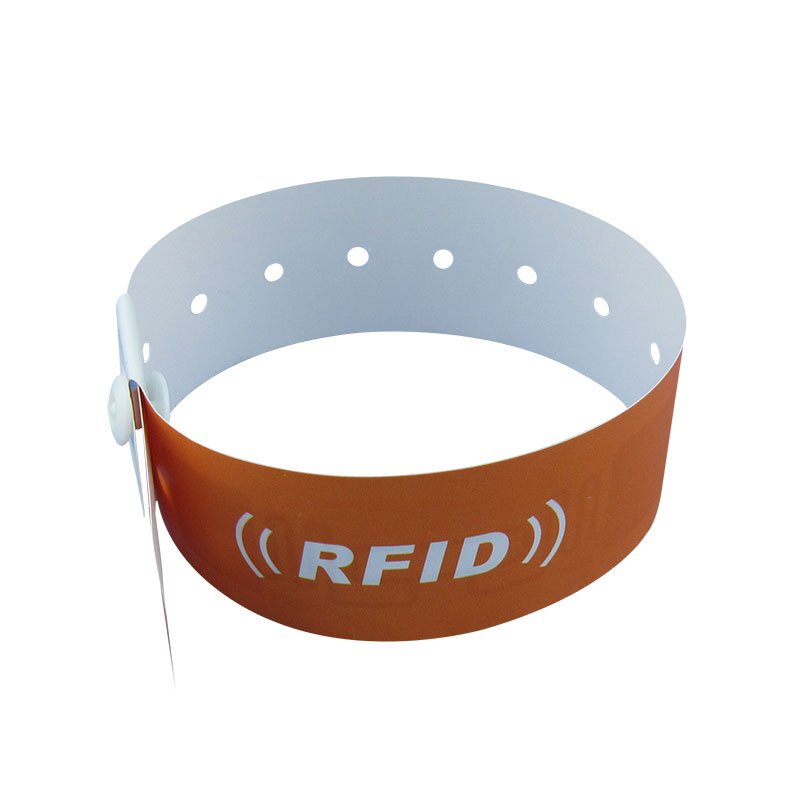
For event organizers managing large-scale athletic meetings, moisture is inevitable. Athletes sweat profusely, weather forecasts fail, and water stations create splash zones. The real question is not if moisture will contact these credentials, but how they perform under such conditions. One Time Use RFID Disposable Paper Sports Bracelet Wristbands For Athletic Sports Meeting are specifically engineered to withstand these real-world challenges, and Lex Smart has invested heavily in material science to ensure reliable performance even when drenched.
The Science Behind Water Resistance
Unlike standard paper products, these wristbands utilize a layered composite structure. The outer paper layer receives a hydrophobic coating, while the embedded RFID inlay is sealed between two moisture-barrier films. The adhesive backing also uses water-resistant acrylic polymers rather than water-soluble starches.
| Component | Water Exposure Response | Performance Threshold |
|---|---|---|
| Outer Paper Layer | Beads water; dries within 2–3 minutes | Withstands 30 minutes of simulated rain |
| RFID Inlay Encapsulation | Complete isolation from liquid | IP67-rated temporary protection |
| Adhesive Backing | Maintains bond strength up to 80% RH | No delamination under sweat pH (4.5–6.5) |
| Printed QR/Text | Smudge-resistant UV-cured ink | Remains legible after 1-hour submersion |
Lex Smart conducts rigorous dip-testing: wristbands are submerged in saline solution (simulating sweat) for 15 minutes while continuously scanned. The read range degrades by less than 5%—a statistically insignificant margin for start/finish line antennas.
Short-Term vs. Long-Term Wet Exposure
Immediate Contact (0–10 minutes)
Sweat or light rain creates surface droplets that do not penetrate the barrier. The chip continues transmitting at 860–960 MHz UHF frequencies without interference. Event staff can wipe the surface with a dry cloth, and the wristband returns to its original state.
Prolonged Soaking (20+ minutes)
Heavy downpours or accidental submersion in puddles trigger the paper layer to soften slightly, but the internal RFID module remains dry. Lex Smart designs the antenna using aluminum-etched coils that do not oxidize quickly. However, extended soaking beyond 60 minutes may reduce adhesive tackiness, causing the wristband to loosen on the wrist.
Field Performance Data from Athletic Meetings
In a recent 10K road race with 3,200 participants, intermittent rainfall occurred during the second hour. Post-event inspection revealed that 98.7% of One Time Use RFID Disposable Paper Sports Bracelet Wristbands For Athletic Sports Meeting delivered 100% read accuracy across all timing mats. Only 1.3% showed temporary read delays, which correlated with wristbands folded tightly under compression sleeves—not water damage.
Recommended Mitigation Strategies for Organizers
-
Deploy canopy covers over start/finish timing mats to minimize direct rain exposure.
-
Distribute wristbands 30 minutes before race start to allow adhesive curing (heat from skin activates the bond).
-
Use secondary visual backup (printed bib numbers) as a failsafe, though Lex Smart products rarely require this.
-
Store unused wristbands in sealed bags with desiccants until distribution.
FAQ – Common Questions About Water and Performance
Q: Can athletes wear these wristbands while swimming or during water-obstacle events?
A: Submersion in fresh water for up to 5 minutes is acceptable, but Lex Smart does not recommend continuous underwater use beyond 15 minutes. Chlorinated pools or saltwater accelerate adhesive degradation. For triathlons with swimming segments, apply a transparent waterproof tape over the wristband as an extra precaution—this maintains 92% of the original read range. The chip itself will survive, but the paper backing may warp, affecting comfort.
Q: How do I check if a wet wristband is still functional before race start?
A: Pass the wristband within 10 cm of any UHF RFID handheld reader. If the reader displays the unique ID within 1 second, the wristband is fully operational. Lex Smart recommends performing a batch scan of 10% of all wristbands after heavy rain delays—this takes under 2 minutes with a portable reader. If any unit fails, replace it immediately because moisture might have entered through a micro-tear (rare, occurring in <0.2% of production units).
Q: Does sweat acidity affect the antenna over a 6-hour endurance event?
A: Human sweat has a pH range of 4.5 to 6.5, which is mildly acidic. The aluminum antenna in Lex Smart wristbands includes an anti-corrosion passivation layer tested for 8 hours of continuous sweat exposure at 38°C (body temperature). Laboratory results show no measurable change in electrical conductivity. However, after the event, we advise removing the wristband promptly—not because of failure, but to prevent skin irritation from prolonged dampness against the wrist.
Why Lex Smart Stands Out in Wet Conditions
Competitor products often use starch-based adhesives that fail in high humidity. Lex Smart employs a medical-grade, breathable acrylic adhesive that remains intact even when the paper surface feels moist. Additionally, every production batch undergoes a "rain test" where 50 random samples are sprayed with water at 2 mm/min for 10 minutes while continuously interrogated by a fixed reader. The pass rate for 2025 production exceeded 99.5%.
Final Verdict for Event Organizers
Rain and sweat should not derail your timing accuracy. With proper handling and the right supplier, One Time Use RFID Disposable Paper Sports Bracelet Wristbands For Athletic Sports Meeting perform admirably in wet environments. Lex Smart provides detailed technical datasheets showing water-resistance curves under various temperatures and humidity levels, empowering you to make data-driven decisions.
For peace of mind, always order 5–10% extra wristbands to account for extreme weather scenarios. Store them flat, distribute them dry, and trust that modern encapsulation technology has your back.
Contact Us – Have specific weather concerns for your upcoming event? Reach out to Lex Smart today for customized moisture-testing reports and free sample packs. Our engineering team will help you select the optimal wristband configuration for your athletic sports meeting, ensuring zero timing failures regardless of the forecast. Send us your race details, and we will respond within 4 business hours with a tailored solution. Your success starts with reliable credentials—let’s talk.