

How Do 6 Inch Wheel Go-Karts Compare to 8 Inch or 10 Inch Models
2026-06-23
Choosing the right wheel size for a go-kart is not merely an aesthetic decision. It fundamentally alters the machine’s handling, performance, and suitability for different terrains. While larger wheels often look more aggressive, the 6 Inch Wheel Go-Kart occupies a specific niche that appeals to younger drivers, casual backyard users, and budget-conscious builders. This comparison breaks down the technical and practical differences between 6 Inch, 8 Inch, and 10 Inch models, helping you decide which size truly fits your needs.
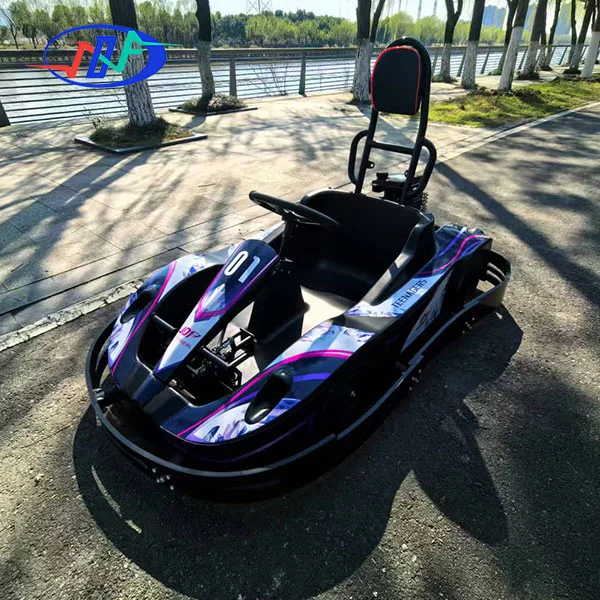
The Core Difference: What Wheel Size Actually Changes
Wheel diameter directly affects three critical areas: ground clearance, gear ratio (torque vs. speed), and unsprung weight. A 6 Inch Wheel Go-Kart typically sits lower to the ground, offering a more stable center of gravity but less clearance for obstacles. In contrast, 8-inch and 10-inch wheels raise the chassis, smoothing out rough trails but raising the center of gravity, which can affect cornering stability at higher speeds.
| Feature | 6 Inch Wheel | 8 Inch Wheel | 10 Inch Wheel |
|---|---|---|---|
| Ground Clearance | 1.5 – 2.0 inches | 2.5 – 3.5 inches | 4.0 – 5.5 inches |
| Typical Top Speed | 15 – 22 mph | 18 – 28 mph | 22 – 35+ mph |
| Best Terrain | Pavement, hard-packed dirt, flat grass | Gravel, mowed fields, light trails | Rocky paths, deep mud, tall grass |
| Acceleration (0-15 mph) | Very quick (high torque) | Moderate | Slower (needs more power) |
| Tire Replacement Cost | $15 – $25 each | $25 – $40 each | $40 – $70 each |
| Recommended Age Group | 5 – 12 years | 10 – 16 years | 14 years & above (adult) |
Performance on Different Surfaces
The 6 Inch Wheel Go-Kart excels on smooth, compact surfaces. Its smaller diameter creates a higher gear ratio effect, meaning each revolution of the axle covers less distance but delivers more rotational force to the ground. This makes it exceptionally responsive when pulling away from a standstill. However, on loose gravel or tall grass, the 6 Inch Wheel tends to dig in rather than roll over, reducing efficiency and increasing the risk of getting stuck.
Conversely, 10-inch wheels act like rollers, bridging over small rocks and roots. They absorb shocks better, reducing driver fatigue on long rides. Yet, they demand more engine power to turn, which is why they are often paired with torque converters rather than direct-drive centrifugal clutches. The 8 Inch Wheel sits in the middle, offering a balanced compromise—adequate roll-over capability without excessively burdening a standard 196cc or 212cc engine.
Handling and Steering Effort
Steering geometry is heavily influenced by wheel size. A 6 Inch Wheel Go-Kart features a shorter scrub radius, meaning the tire's contact patch pivots more easily. This results in lighter, more responsive steering—ideal for younger drivers with less upper body strength. The trade-off is a harsher ride; every crack in the pavement transmits directly to the steering wheel.
Larger wheels (10-inch) have a wider contact patch and greater rotational inertia. They resist directional changes, requiring more effort at the steering wheel, but they also track straighter over uneven surfaces. For competitive racing on dirt ovals, many drivers prefer 8-inch rears with 6-inch fronts to combine traction with nimble turn-in—a setup that Jindifan offers in several adjustable kits.
Durability and Maintenance Considerations
Smaller wheels spin faster at any given vehicle speed, which increases bearing and axle wear over time. A 6 Inch Wheel Go-Kart's hub bearings may need replacement more frequently if used heavily on rough terrain. On the plus side, tires are cheaper and widely available, and the lower ground clearance reduces the risk of rollover during sharp turns.
10-inch wheels, while more durable off-road, place greater stress on the steering spindle and kingpin bolts. They also require heavier-duty brake systems to slow down the increased rotational mass. For families looking for a low-maintenance backyard kart, the 6 Inch Wheel is often the wiser choice, especially when paired with a reliable brand like Jindifan, which uses sealed bearings and reinforced rims specifically for this size.
6 Inch Wheel Go-Kart FAQ
Q1: Can a 6 Inch Wheel Go-Kart handle grass and dirt trails, or is it only for pavement?
A: A 6 Inch Wheel Go-Kart can handle well-manicured grass and hard-packed dirt, but it struggles in loose, deep, or wet soil. The small diameter reduces floatation, causing the tires to sink rather than roll. If your primary terrain is lawn or light trail, choose a treaded tire design (e.g., turf-saver or knobby) and keep tire pressure between 12–15 PSI. For serious off-roading, an 8-inch or 10-inch model is significantly more capable. Jindifan offers a dedicated off-road tire package for the 6-inch chassis, improving mud traction by nearly 40% compared to standard slick tires.
Q2: Does a 6 Inch Wheel Go-Kart have a lower top speed than larger-wheeled models?
A: Yes, but not always for the reason you might think. While a 6 Inch Wheel Go-Kart has a smaller circumference (about 18.8 inches vs. 31.4 inches for a 10-inch tire), its effective top speed depends on the axle sprocket tooth count. With the same engine RPM and sprocket ratio, the 6-inch wheel will always be slower—roughly 30–35% slower than a 10-inch wheel at identical RPM. However, this lower speed is a safety advantage for children, and you can compensate by using a smaller rear sprocket (e.g., 54-tooth instead of 60-tooth) to gain 3–5 mph without overheating the clutch. Always consult your engine's torque curve before making gearing changes.
Q3: Are 6 Inch Wheel Go-Karts easier to control for first-time drivers?
A: Absolutely. The lower center of gravity and reduced gyroscopic effect make a 6 Inch Wheel Go-Kart much more forgiving for beginners. It responds quickly to steering inputs, turns in a tighter radius, and feels less "tippy" during sharp corners at moderate speeds. Furthermore, because the wheels are lighter, the braking distance is shorter—typically 12–15 feet from 15 mph, compared to 18–22 feet for a 10-inch kart. Many driving schools and amusement parks choose 6-inch models for their junior programs. Jindifan specifically engineers its 6-inch chassis with a wider rear track (42 inches) to further enhance lateral stability, giving new drivers confidence from their very first lap.
Which Size Should You Choose?
-
Choose 6 Inch Wheel if: You are buying for a child under 12, your terrain is flat and smooth, or you prioritize low cost and easy maintenance.
-
Choose 8 Inch Wheel if: You want a versatile kart for mixed surfaces (yard + gravel driveway) and have a mid-sized engine (200cc+).
-
Choose 10 Inch Wheel if: You are an adult rider, plan to tackle rugged trails, or need higher ground clearance for tall grass and rocky paths.
Jindifan manufactures all three wheel configurations with interchangeable axle hubs, meaning you can upgrade from a 6 Inch Wheel Go-Kart to an 8-inch setup later without replacing the entire frame. This modular design is a testament to their engineering foresight, saving customers money as their skills and terrains evolve.
Final Verdict
The 6 Inch Wheel Go-Kart is not inferior—it is specialized. It offers superior acceleration, nimble handling, and lower running costs at the expense of off-road capability and top-end speed. When compared to 8-inch or 10-inch counterparts, it stands out as the safest, most manageable option for young riders and flat-ground recreational use. Meanwhile, 8-inch models provide the best all-around compromise, and 10-inch versions dominate extreme environments. Assess your driver's age, your typical surface, and your budget honestly—then match the wheel size to the mission, not the marketing.
Contact Us
Have a specific terrain or driver in mind? The team at Jindifan specializes in custom wheel-and-sprocket combos for every application. Reach out to our support engineers for a free sizing consultation, and we will help you spec the perfect 6 Inch Wheel Go-Kart or larger model for your exact needs.