

How Can Children Puzzles Enhance Learning and Development?
2026-03-04
Article Summary
Children puzzles are more than just playful activities—they are essential tools for cognitive, emotional, and social development. This article explores the benefits of puzzles for children, how to select the right type for different age groups, and strategies to maximize learning outcomes. Parents, educators, and caregivers will gain insights into how puzzles can improve problem-solving skills, hand-eye coordination, memory retention, and creativity.
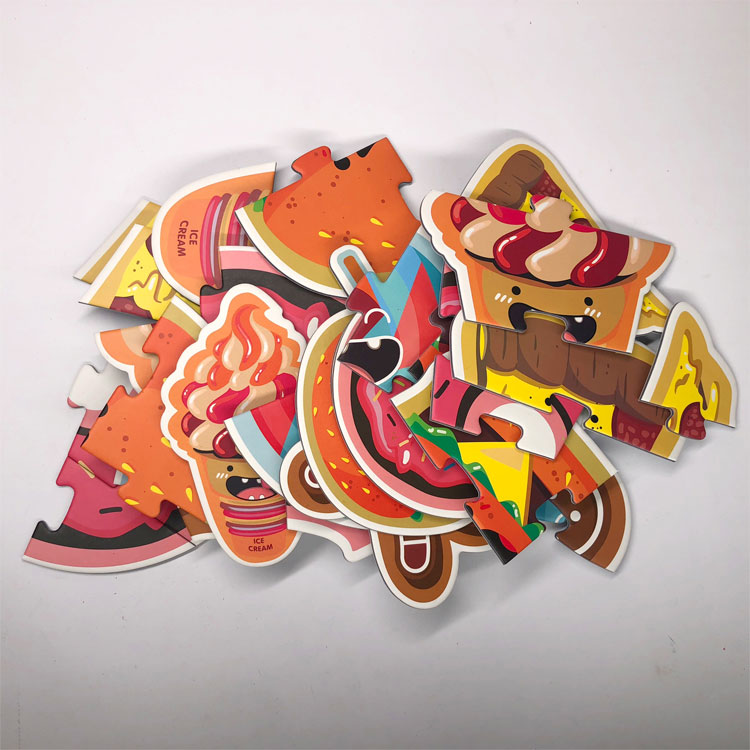
Table of Contents
- Children Puzzle Overview
- Key Benefits of Children Puzzles
- Types of Children Puzzles
- How to Choose the Right Puzzle for Your Child
- Developmental Skills Supported by Puzzles
- Tips for Puzzle Activities
- Puzzle Type Comparison Table
- Frequently Asked Questions
- Conclusion and Contact Us
Children Puzzle Overview
Children puzzles are educational toys that challenge children to think critically, recognize patterns, and develop fine motor skills. They come in various formats, including jigsaw puzzles, wooden shape puzzles, and interactive 3D puzzles. Designed to match age-specific developmental stages, puzzles provide opportunities for problem-solving, patience, and concentration. Ningbo Sentu Art And Craft Co., Ltd. offers puzzles that integrate bright colors, durable materials, and safe designs to ensure both fun and learning.
Key Benefits of Children Puzzles
Puzzles have multiple advantages for child development. Understanding these benefits helps parents and educators select suitable activities.
- Cognitive Development: Enhances problem-solving, logical thinking, and spatial awareness.
- Motor Skills: Improves hand-eye coordination and fine motor control.
- Memory Enhancement: Strengthens short-term and visual memory through repeated practice.
- Patience and Persistence: Encourages children to concentrate and complete tasks systematically.
- Emotional Satisfaction: Promotes confidence and self-esteem when puzzles are solved successfully.
- Social Interaction: Supports cooperative play and communication skills when solved in groups.
Types of Children Puzzles
Different puzzle formats provide unique learning opportunities. Here are the main types:
- Jigsaw Puzzles: Traditional puzzles with interlocking pieces to form pictures or scenes.
- Wooden Shape Puzzles: Puzzles featuring geometric shapes, animals, or letters, often made from safe wood.
- 3D Puzzles: Builds three-dimensional structures, encouraging spatial reasoning.
- Interactive and Electronic Puzzles: Digital or interactive puzzles that provide feedback and hints.
- Alphabet and Number Puzzles: Combines literacy and numeracy with problem-solving skills.
How to Choose the Right Puzzle for Your Child
Selecting age-appropriate puzzles ensures both safety and educational effectiveness. Consider these factors:
- Child’s age and developmental stage
- Complexity level and number of pieces
- Material quality and safety standards
- Educational objective (e.g., cognitive skills, language development)
- Child’s interests (animals, vehicles, fairy tales, etc.)
Ningbo Sentu Art And Craft Co., Ltd. provides a range of puzzles tailored for various age groups and learning goals, ensuring both engagement and skill development.
Developmental Skills Supported by Puzzles
Puzzles enhance multiple areas of child development. Key skill areas include:
- Problem-Solving: Encourages children to analyze, plan, and execute strategies.
- Fine Motor Skills: Handling small pieces improves dexterity.
- Spatial Intelligence: Builds understanding of shapes, sizes, and orientations.
- Memory and Concentration: Strengthens focus during repeated play sessions.
- Creativity: Visualizing completed puzzles fosters imagination and artistic thinking.
Tips for Puzzle Activities
Parents and educators can maximize the learning value of puzzles by following practical tips:
- Start with simple puzzles and gradually increase complexity.
- Encourage children to verbalize their thought process during assembly.
- Provide a dedicated, distraction-free space for puzzle activities.
- Introduce group puzzle sessions to promote teamwork.
- Combine puzzles with storytelling to enhance cognitive and language skills.
Puzzle Type Comparison Table
| Puzzle Type | Suitable Age | Learning Benefits | Typical Material |
|---|---|---|---|
| Jigsaw | 3-12 years | Spatial reasoning, patience | Cardboard, wood |
| Wooden Shape | 1-6 years | Motor skills, shape recognition | Non-toxic wood |
| 3D Puzzles | 6+ years | Spatial intelligence, problem-solving | Plastic, wood |
| Alphabet & Number | 2-8 years | Literacy, numeracy, memory | Wood, foam |
Frequently Asked Questions
At what age should children start puzzles?
Simple puzzles can be introduced as early as 12 months, with complexity increasing as the child grows.
How many pieces are suitable for young children?
For toddlers, puzzles with 4-12 pieces are recommended; older children can handle 50-200 pieces.
Do puzzles improve academic skills?
Yes, puzzles strengthen critical thinking, memory, problem-solving, and early literacy skills, which contribute to academic readiness.
Are wooden puzzles safer than plastic?
Both can be safe if non-toxic and compliant with safety standards. Wooden puzzles are generally more durable and eco-friendly.
Conclusion and Contact Us
Children puzzles are valuable educational tools that combine fun with learning. They promote cognitive development, fine motor skills, patience, creativity, and social interaction. By selecting age-appropriate puzzles and providing guided support, parents and educators can maximize their impact.
Ningbo Sentu Art And Craft Co., Ltd. offers a wide range of high-quality children puzzles designed to engage young learners while supporting skill development. To explore our product range or receive expert guidance on choosing the right puzzle for your child, contact us today and discover how our puzzles can enrich your child’s learning journey.