

Stainless Steel Hex Self Drilling Screws Manufacturer Guide for Industrial Buyers
2026-09-21
For industrial buyers, sourcing stainless steel hex self-drilling screws often means wading through spec sheets that look identical while performance on the line varies wildly. The real cost of a mediocre supplier rarely shows up at checkout—it appears later, in seized threads, corroded heads, or batches that fail audit after audit. This guide is built for procurement teams who’d rather prevent those problems than negotiate returns. We’ll walk through the material grades, drive styles, and coating details that actually matter, then show how Wanluo approaches manufacturing with those specs in mind—not just on paper, but in every hex head that leaves the floor.
When 304 Works and When You Need 316 in Corrosive Environments
Most people assume 316 stainless is always the safer choice in corrosive settings, but that is not exactly true. Grade 304 handles a surprising range of environments without issue, especially mild atmospheric exposure, freshwater, and many food-processing conditions. Its chromium-nickel composition forms a stable passive layer that resists oxidation and everyday chemical contact. For splash zones, indoor equipment, or coastal areas with only occasional salt mist, 304 often lasts for decades with routine cleaning. The real deciding factor is not just “corrosion” but the specific corrosive agent, its concentration, temperature, and whether the surface stays wet for long periods.
Where 304 starts to struggle is sustained chloride exposure, particularly in marine settings, swimming pools, or industrial processes involving bleach or brine. That is when the molybdenum in 316 becomes essential. Molybdenum strengthens the passive film, making it far more resistant to pitting and crevice corrosion, the two most common failure modes in stainless steel. If you see rust staining around bolts, under gaskets, or in sheltered corners where salt deposits accumulate, that is a sign 304 has reached its limit. In such cases, upgrading to 316 is not overkill; it is a practical way to avoid premature replacement and safety risks.
Temperature also shifts the boundary. At ambient temperatures, 304 may handle occasional saltwater splash, but continuous immersion or elevated heat accelerates attack. In hot coastal climates, 304 components can develop tea staining within months, while 316 remains clean. A good rule of thumb: if the environment includes chlorides, moisture, and heat together, choose 316 without hesitation. If the exposure is mild and intermittent, 304 offers better value and easier fabrication. Knowing the actual service conditions beats relying on a blanket “more alloy is better” mindset.
Drilling Through Thicker Steel? Check the Point Geometry First
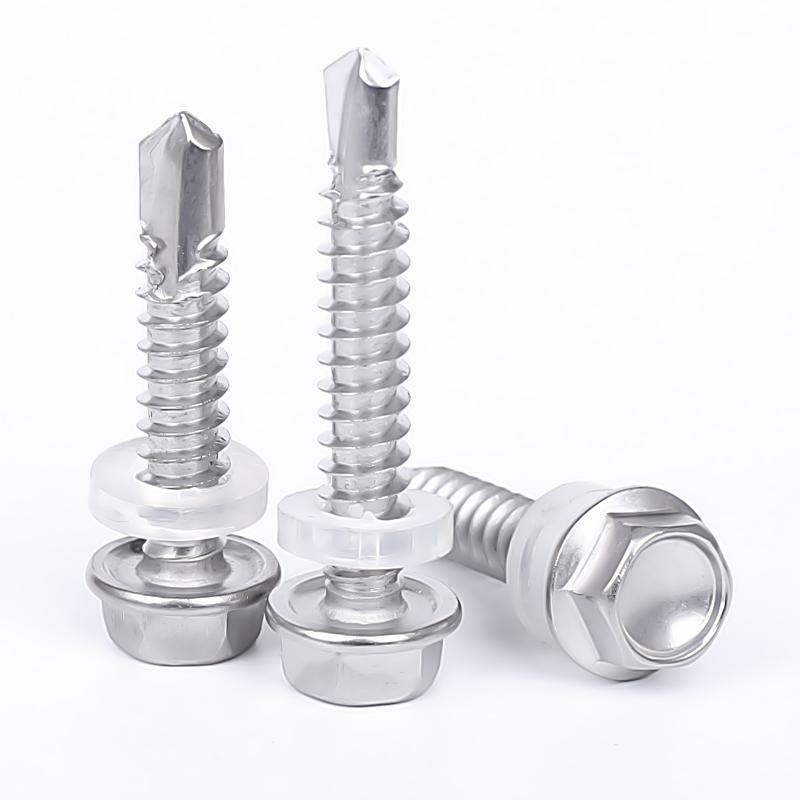
When steel gets past about a quarter inch, the standard 118° point starts to skate and fight you. A 135° split point changes the game—it centers faster, needs less downfeed pressure, and leaves a cleaner start instead of a wandering divot.
Look at the chisel edge, the little flat where the cutting lips meet. On thick plate, a wide chisel edge just plows metal ahead of the point. Splitting the point or buying bits with a factory split thins that edge, so the outer lips shear material instead of shoving it outward and oversizing the hole.
Watch the chips, too. Long, stringy spirals tell you the point isn't breaking material cleanly. A split point or a steeper point angle makes smaller, tighter curls that clear the flute—especially in deep holes where a packed chip can seize and snap the bit.
What a Reputable Manufacturer Won’t Hide About Thread Forming
Ask a supplier about thread forming and you’ll quickly separate the ones who actually run the process from those who just quote it. A reputable manufacturer will openly discuss the fact that forming threads displaces metal rather than cutting it away. That means grain flow improves and threads often come out stronger, but it also means the blank diameter, hole tolerance, and material ductility have to be controlled far more tightly than many buyers expect. If a shop won’t talk about blank prep or shrugs off the difference between forming in 6061 aluminum and 304 stainless, that’s a warning sign.
Tool life and lubrication are another area where honesty matters. Form taps generate more friction and heat than cutting taps, so the right coolant or oil isn’t optional. A trustworthy manufacturer will show you wear data, explain how they monitor torque, and tell you when a tool needs to be replaced before it snaps in the part. They won’t pretend the process is problem-free, but they will explain how they keep it predictable.
Finally, they won’t hide the limits. Thread forming doesn’t suit every material or every hole depth, and a good shop will tell you when roll forming isn’t the best choice. They’ll also be upfront about how thread percentage, hole size, and surface finish affect performance. That kind of transparency isn’t just nice to have; it’s how you avoid field failures and surprise scrap rates.
The Difference Between a Cheap Hex Head and One That Survives High Torque
A cheap hex head often starts out looking identical to a quality fastener. The difference only becomes obvious when a long breaker bar or impact wrench gets involved. Low-grade bolts are usually stamped from soft steel with shallow, slightly rounded drive pockets. Under serious torque, the hex corners start to yield almost immediately. The wrench slips, the edges mushroom, and what should have been a simple removal turns into a drilling job.
A hex head built for high torque uses a different recipe. The steel is typically heat-treated to a higher grade, and the drive profile is machined or cold-formed with tighter tolerances. The flats are crisp, the corners are sharper, and the head height is often slightly taller to give the socket more purchase. That small difference in geometry spreads the load evenly across the drive faces instead of concentrating it on the corners.
You can spot the gap without a hardness tester. Put a snug-fitting socket on a cheap bolt and lean into it. You will feel the socket start to rock as the metal gives way. Do the same with a properly rated hex head, and the engagement stays firm until the torque wrench clicks or the bolt finally snaps. The cheap one fails at the drive before it ever transfers full force to the threads.
Decoding Test Reports: What Matters Beyond the Tensile Strength Number
Tensile strength grabs the headline in most test reports, but it rarely tells the whole story. Elongation at break shows how far a material stretches before failing—crucial for parts that flex or absorb impact. A high tensile number combined with low elongation often means brittleness, which can lead to sudden fractures under real-world stress. Modulus, or stiffness, matters just as much when dimensional stability is required.
Beyond the stress-strain curve, tear strength, compression set, hardness, and environmental resistance shape long-term performance. For rubber seals and gaskets, compression set indicates whether the material will bounce back after being squeezed. Outdoor applications demand attention to UV and ozone resistance, while chemical exposure tests predict service life in harsh fluids. Skimming past these values risks selecting a material that passes the tensile check but fails in the field.
Test standards also play a quiet but critical role. ASTM and ISO methods can produce different numbers for the same material due to specimen geometry, speed, or conditioning. Always compare data generated under identical protocols, and note sample preparation details. A report is only as useful as the context behind its numbers.
Lead Time Realities for Custom Lengths and Special Finishes
Custom lengths and special finishes can stretch timelines in ways that standard catalog products never do. Most manufacturers carry stock lengths and common finishes, but once you step outside those pre-set options, the clock resets. A request for a 14-foot bar instead of the usual 12-foot standard often means waiting for a new cutting schedule, recalibrating equipment, and sometimes even sourcing raw material that isn’t already on the floor.
Finishes can be even more unpredictable. A standard anodized or powder-coated finish might have a steady, predictable queue, but unusual textures, custom color matching, or dual finishing processes can push a project into a different workflow entirely. Some facilities batch special jobs to reduce waste, which means your order might sit until enough similar pieces are ready to run together. That’s why a finish that looks simple on paper can suddenly add three to five weeks without warning.
The honest answer is that there is rarely a fixed number for custom lead times until the order is actually scheduled. Reputable suppliers will give you a range, not a promise, and they’ll flag anything that requires outside processing like water-jet cutting or specialty anodizing. If your project hinges on a custom length or finish, the smartest move is to lock down the design early and communicate the hard deadline from day one. That way, the lead time becomes a planning factor instead of a last-minute surprise.
FAQ
316 is worth the extra cost only when the fasteners face constant salt spray or chemical washdowns. If the environment is simply humid or mildly acidic, 304 with a proper passivation layer handles it fine. But don't rely on 304 near coastal vents or chlorine storage—crevice corrosion at the washer interface can appear within months, even if the screw body looks intact.
Real manufacturers usually have in-house heading, thread rolling, and heat treatment under one roof. Ask if they can adjust the drill point geometry for specific steel thicknesses—traders typically only stock one generic point style. A manufacturer will also share batch-level hardness readings, not just material certificates from a mill they bought wire from.
The drill point hardness often drops off after the first few threads. If the manufacturer doesn't perform a secondary hardening on the point alone, the tip can fold when it hits mill scale or a slight weld spot. Also check the flute length; too short a flute causes chip packing that overheats the point before it cuts through.
For a #12 or 1/4-inch diameter screw, you typically need 90 to 120 inch-pounds to seat the head without stripping. But if the drill point is longer than the material thickness by more than 3 mm, you'll need higher torque to avoid under-driving. Always test with a calibrated clutch driver on actual production steel, not clean lab coupons.
Request a first-article inspection report that includes thread profile measurements from three points along the screw length. Mixed pitches often come from worn rolling dies that weren't replaced on schedule. You can also do a quick field check by threading a sample into a certified nut gauge—if it binds before full engagement, the pitch is drifting.
Yes. For structural applications, you want a raised or indented manufacturer identifier plus a grade symbol, often marked as A2 or A4. But don't accept a laser-etched marking on the hex face—it can create stress risers. The marking should be forged or rolled during heading so it doesn't weaken the drive area.
If they already run the diameter and thread pitch, expect 4 to 6 weeks for custom lengths up to 150 mm. Longer lengths or special drill point angles add about 2 weeks because they need to change the feed mechanism and re-time the header. Beware any supplier promising 2 weeks—they're likely cutting standard screws down and re-pointing them, which ruins the hardness profile near the tip.
Self drilling screws rely on thread-forming for grip, so they generally hold better under vibration than machine bolts in untapped holes. But over-torquing the hex head can stretch the shank and reduce clamping force. For high-vibration areas like conveyor mounts, use a flanged hex head with serrations—those serrations add about 30% more breakaway torque than a plain hex.
Conclusion
When sourcing stainless steel hex self drilling screws for industrial use, the first real test is understanding where 304 stops being enough and 316 becomes mandatory. It's not just about rust on the surface—chloride-heavy settings like coastal plants or chemical washdowns will chew through 304 at the thread roots within months. A manufacturer who knows their material will tell you that molybdenum content, not the shiny finish, is what keeps pitting out of the tapped hole. The same honesty applies to point geometry. If you're drilling into plate steel over 5mm, a generic #3 point will burn out before it seats, no matter how good the stainless is. Reputable suppliers publish drill capacity by actual steel thickness and hardness, and they won't hide the fact that thread forming in stainless creates more friction than carbon steel—so proper pre-hardening of the point and a reliable wax or dry-film lubricant are part of the design, not an upsell.
Cheap hex heads fail long before the screw does. Under high torque from an impact driver, soft corners round off or the head shears at the washer face, leaving you with a half-driven fastener and a ruined panel. You want a manufacturer who controls the head forging temperature and checks hex dimensions against ISO 10664 or DIN 7500, not one who just taps a generic blank. Then there's the paperwork. Tensile strength alone tells you almost nothing for self drillers—ask for a full mill cert showing yield ratio, elongation, surface hardness, and preferably a torsional or drive test result from the actual batch. Finally, be realistic about lead times. Custom lengths under 10,000 pieces and special finishes like Xylan or black oxide over stainless often sit in queue behind larger coating runs. A good maker will quote you an honest window up front, because rushed deliveries in this category usually mean skipped passivation or under-baked plating.
Contact Us
Contact Person: Shane
Email: [email protected]
Tel/WhatsApp: 8613357785029
Website: https://www.wanluohardware.com