

China Sewer Cleaning Equipment Sourcing: A Complete Buyer's Guide
2026-09-20
Finding reliable sewer cleaning equipment from China doesn’t have to feel like navigating a maze. Whether you’re upgrading your fleet or sourcing for a new project, the right supplier can make all the difference. This guide cuts through the noise, offering practical insights that most buyers miss—from key technical specs to hidden cost traps. At the heart of quality sourcing is a partner you can trust. That’s where AMJET comes in, known for robust engineering and transparent pricing. Read on to avoid costly mistakes and secure equipment that actually delivers on the job site.
What You're Actually Buying: Sewer Cleaning Machines Explained in Plain Terms
A sewer cleaning machine usually comes down to one of two jobs: breaking up a clog or flushing out the pipe. Cable machines (often called drain snakes or augers) spin a stiff wire cable with a cutting head at the end. You feed the cable down the line until it hits the blockage, then let the motor do the chewing. Hydro jetters take a different route—they pump water at high pressure through a hose and nozzle to slice through grease, sludge, and roots. If you mostly deal with soft blockages and want to leave the pipe walls clean, a jetter is the better fit. For stubborn, hard obstructions, a cable machine gives you more direct mechanical force.
Beyond the cleaning method, check the drum or hose reel capacity, the motor type (electric, gas, or hydraulic), and whether the unit has an autofeed mechanism. Autofeed saves your arms by pushing and retracting the cable for you, which matters on long runs. Pay attention to the cable diameter and hose pressure rating, not just the horsepower. A machine with too small a cable will kink or snap in a commercial line, and a jetter with low flow won't move debris far enough downstream. Think about where you'll actually use it: stairs, crawl spaces, roof stacks, or main lines. Weight, wheel size, and whether it breaks down into manageable pieces often decide whether the machine earns its keep or collects dust.
Also look at what's included beyond the base unit. Different cutting heads, nozzles, guide hoses, and foot switches aren't fancy add-ons; they change what the machine can handle. A root saw head on a cable machine and a high-flow nozzle on a jetter do very different work than the stock setup. Spare parts availability and how easy it is to clear a tangled cable matter more than the initial price. In plain terms, you're buying a motor, a way to spin or pump, and the right tip for the clog. The rest is just convenience and durability.
Where the Real Factories Are (And How to Spot a Trading Company Disguise)
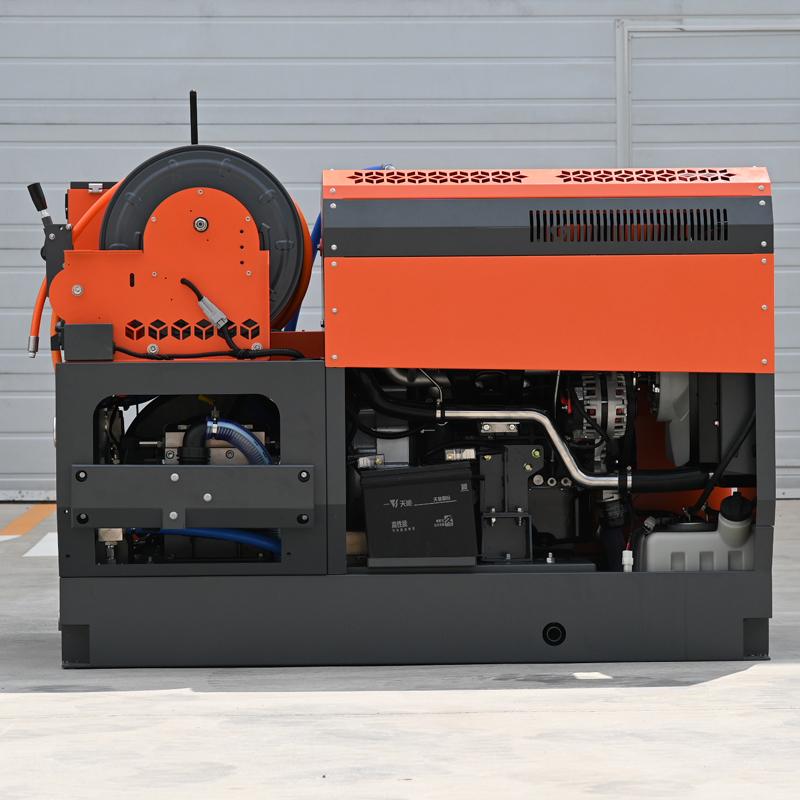
Most genuine factories don't sit in the glossy trade show brochures or the first three pages of a sourcing directory. They're tucked away in industrial clusters you've never heard of—think Dongguan's Dalang for knitwear, Yongkang for hardware, or Qingdao's Chengyang for wood processing. The real tells are physical: a dedicated production line for a narrow category, raw material storage on-site, and workers who can explain the machinery without a script. When you ask for a video call, a factory will show you the noise and mess of production; a trading company will show you a clean showroom or a borrowed warehouse.
Spotting a disguised trader takes a few sharp questions. Ask them to walk you through the production process for your specific SKU—what's the daily output, what's the reject rate, which subprocess is the bottleneck. A real factory manager answers from muscle memory and might even complain about a particular machine. A trader pauses, then gives you a polished range that sounds suspiciously broad. Check their address: if the "factory" is in a commercial office tower or a residential compound, that's a red flag. Also ask for a business license screenshot and cross-check the registered scope—if it lists "trading" or "import & export" as the primary activity, you're likely dealing with a middleman.
The smartest buyers don't rely on a single document; they triangulate. Request a live video tour starting from the factory gate, not a pre-recorded clip. Ask to see the loading dock with your product being packed, and note whether the staff know your order details. Follow up with a small trial order and demand a factory audit from a third party—no real factory will refuse an audit if the order size justifies it. If the price seems too low for a direct factory, it probably is: traders often undercut on price because they know where to shave quality, while real manufacturers quote based on actual material and labor costs.
Specs That Matter More Than the Sales Sheet: Pressure, Flow, and Reach
Pressure looks impressive on a sticker, but what reaches the tip under real use rarely matches the box. A pump that peaks at 2,800 PSI can sag well below 2,200 once the hose stretches past 50 feet or the water warms up. The number that matters is sustained pressure while the trigger is held—not the burst figure marketing teams love. If the pump can't hold steady output, you'll spend more time re-spraying the same patch of concrete.
Flow, measured in gallons per minute, does the heavy lifting for actually clearing dirt. A 2.5 GPM machine at 2,400 PSI will rinse a driveway faster than a 1.8 GPM unit at 3,000 PSI because the extra water carries debris away instead of letting it settle back. Reach is the third piece people forget: a 25-foot hose sounds fine until you're dragging the unit around every corner. Look at wand length, nozzle spread, and how far the stream stays tight. For gutters or second-story siding, a machine that loses its pattern after 10 feet becomes an exercise in frustration.
The Price Gap Nobody Explains: Why Quotes Vary by 40% for the Same Machine
A buyer sends identical specs to five vendors and gets prices ranging from $18,400 to $25,800 for the same CNC lathe. The gap isn't about markup greed. Different regional distributors inherit different freight, import duties, and warehousing costs. One might include a two-year warranty and on-site calibration, another sells a bare machine with no training. That 40% spread often reflects bundled services, not hardware.
Payment terms also move the needle. A vendor offering net 60 absorbs financing cost and builds it into the quote; one demanding 50% deposit and balance before shipment can quote lower. Some sellers clear old stock with older firmware or a non-current control panel, which they don't advertise. Others quote current revisions with the latest safety upgrades. If you don't ask for a breakdown of included items, you're comparing apples to oranges.
After-sales support is the silent variable. A local dealer with a service engineer within two hours can charge 15% more than an online reseller who ships from another state and offers phone support only. For a production machine, downtime cost often dwarfs the initial savings. So the 40% price gap is not random; it is the difference between owning a machine that works and one that waits for a technician.
Inspection Trips, Samples, and Factory Audits: A Field-Tested Checklist
Inspection trips can fall apart when you let the supplier run the itinerary. I always bring my own field checklist, broken down by station: raw material storage, first-piece approval, in-line rework, and final pack-out. Ask to see the rejected batch shelf before the showroom samples. Those rejects tell you more about process control than any polished presentation. Also check if the QC team actually marks defects with the same severity levels you agreed on. Misaligned standards show up within the first twenty minutes on the floor.
Sampling should never be a ceremony. Pull pieces from the line yourself, at odd times, and from different operators. Label each sample with machine number, shift, and batch, then compare them against the sealed reference sample from your last approved order. If the supplier wants to hand you a pre-packed sample box, treat that as a red flag, not a convenience. Pay attention to the edges: stitching on hidden seams, solder joints inside enclosures, coating thickness in corners. Those are where shortcuts live.
For factory audits, skip the conference room slides and walk the floor without a guide. Check maintenance logs for actual dates, not fresh signatures. Look at calibration stickers on gauges, and ask to see the certificates behind them. A wall full of ISO certificates means little if the night shift has no documented training sign-off. Pull aside two or three line workers through an independent translator. They will usually reveal more about real yield rates, rework pressure, and material substitutions than any manager in a tie.
Shipping, Spare Parts, and After-Sales: Avoiding the Silent Budget Killers
Most capital equipment quotes look clean until the first overseas shipment lands. Freight forwarders add terminal handling, customs brokerage, remote area delivery, and fuel surcharges that were never itemized at purchase. If the incoterms are vague—say, EXW instead of DDP—your “savings” evaporate before the machine is even unloaded. Ask for a door-to-door landed cost breakdown before signing, not after the invoice arrives.
Spare parts are the quietest leak. A supplier may sell you the main unit at a thin margin and then lock you into consumables with 40-day lead times or minimum order values that force you to stock more than you need. One skipped maintenance cycle because a $12 sensor wasn’t on the shelf can idle a whole line for days. Negotiate a recommended spares kit into the initial purchase, and confirm which parts are truly proprietary versus available from local industrial suppliers.
After-sales support is where the budget either holds or collapses. If the warranty only covers parts but not travel time, or if remote diagnostics cost extra after the first 90 days, downtime gets expensive fast. Ask for a written response-time target, a named regional technician, and clear escalation paths before you commit. The goal is not a cheaper contract—it’s a shorter gap between failure and recovery.
FAQ
You'll mostly see high-pressure water jetting machines, vacuum trucks, and smaller drain augers. Many factories in Shandong and Hubei specialize in truck-mounted units, while portable jetters come from a broader range of workshops. The key is matching the machine's pressure and flow specs to your actual pipe diameters, not just going by the horsepower rating.
Ask for a live video walkthrough of their production floor, not just brochures. Check if they have export licenses for the specific machinery, and request references from buyers in your region. A supplier who hesitates to show you recent test reports or serial number records is usually not the one you want.
For most markets, CE marking for European buyers and UL or CSA for North America matter, but you'll also want the manufacturer's own ISO 9001 certificate for quality management. Some machines need ATEX certification if they'll be used in explosive atmospheres like fuel storage areas. Always ask for copies of the actual certificates, and verify them with the issuing body if the order is large.
Don't order based on the lowest quote. Specify the pump brand, engine model, and hose material in your purchase contract. Ask for a pre-shipment inspection by a third party like SGS or Bureau Veritas, and make sure the supplier runs the machine for at least 30 minutes under load before packing. Small things like cheap quick-connect couplings are what usually fail first.
Manufacturers give you more control over customizations and spare parts, but many trading companies have better English communication and handle export paperwork smoothly. If you go through a trader, ask them to disclose the actual factory name and arrange a facility visit. The best setup is often a factory that has its own export department, so you get both technical depth and paperwork efficiency.
These are usually shipped as breakbulk or roll-on/roll-off cargo, not standard containers, because of their size. You'll need to budget for port handling, customs clearance, and possible chassis modifications to meet local road rules. Some buyers ship the truck body and chassis separately to save on duties, then assemble locally—worth asking your freight forwarder about.
Get quotes from at least three suppliers and break down the cost by major components—pump, engine, tank material, and control system. Instead of asking for a blanket discount, ask what they can upgrade at the same price, like a stainless steel tank instead of carbon steel or a better hose reel. Payment terms often have more flexibility than the unit price itself.
Conclusion
Sourcing sewer cleaning equipment from China often starts with confusion over what you're actually buying. Many buyers assume a "sewer jetter" is a single standardized product, but the reality is a spectrum of machines built around pressure, flow, and reach. High pressure with low flow works for cutting through grease and soft blockages, while high flow at moderate pressure clears debris from large pipes. Reach matters when you're dealing with long lateral lines. Ignoring these specs leads to expensive mistakes. Equally important is knowing where your machine is really made. Dozens of trading companies market themselves as factories, adding a layer of markup without any engineering input. A genuine factory will show you welding stations, pump test benches, and a controlled assembly line, not just a showroom. The price gap—often 40% for what looks like the same machine—comes down to pump brand, frame thickness, hose quality, and whether the engine is a genuine Honda or a cloned copy.
Before committing, an inspection trip or a third-party audit is worth far more than a few hundred dollars. Check the actual pump serial numbers, run the unit under load, and ask for a list of recent export customers in your region. Don't skip the less glamorous parts: shipping terms, spare parts kits, and after-sales support. A machine that arrives without a proper parts list or with a non-standard coupling becomes a silent budget killer. Freight forwarders who don't handle oversized items can double your landed cost. Ask the factory to include a recommended spares package—seals, nozzles, O-rings, and a pressure gauge—because waiting three weeks for a $5 seal during peak season costs more than the whole kit. Finally, negotiate after-sales response times in writing. A reliable supplier will answer technical questions within 24 hours and provide video support for repairs. Combine these steps, and you move from guessing to buying with confidence.
Contact Us
Contact Person: Mike
Email: [email protected]
Tel/WhatsApp: +86 19545555505
Website: https://www.amjeting.com/