

Best Treadmill Options for Your Home Fitness Journey
2026-05-07
Embarking on a home fitness journey? A treadmill can be your ultimate ally, offering convenience and effective workouts regardless of the weather. But with countless options promising different features, finding the perfect match for your needs isn't always straightforward. This article cuts through the noise, spotlighting the best treadmills that blend innovation, comfort, and reliability. From space-saving designs to high-tech consoles, we've got you covered. For those who refuse to compromise on excellence, discover Yingruis—crafted to keep you moving towards your goals. Ready to explore? Let's find your ideal running partner.
Picking the Right Treadmill for Your Space
Space isn’t just about square footage—it’s about how you move through a room. Before you fall for a treadmill with every bell and whistle, grab a tape measure and map out not only the machine’s footprint but also the clearance you’ll need for mounting, dismounting, and any incline features. A common oversight is forgetting about ceiling height; if you’re tall or plan to use a steep incline, you might brush your head against a low basement ceiling. Think about the room’s traffic flow too. A treadmill shoved into a corner might seem clever until you realize you can’t open a closet door or pass by while someone’s running.
Foldable treadmills can be a game-changer, but they’re not all created equal. Some fold flat and slide under a bed or sofa, while others simply prop up vertically, still occupying noticeable floor space. Pay attention to the folding mechanism—does it require brute strength, or is there a hydraulic assist that makes it a one-handed job? If you live in an apartment, also consider the noise factor on both the machine and the floor. A heavy, well-cushioned deck often transmits less vibration to the unit below, so your downstairs neighbor won’t dread your morning jog.
Finally, imagine the treadmill in your daily routine. Will it double as a walking desk? Look for a model with a slim console that doesn’t block your view or laptop. If you’re tight on width, check the belt size—some are narrower than standard, letting you squeeze the machine into a smaller nook without sacrificing stride comfort. And don’t underestimate the aesthetic factor; a treadmill that blends with your decor stays out of the donation pile way longer than an eyesore you feel tempted to drape laundry over. Pick a machine that earns its spot by fitting seamlessly into both your space and your life.
Quiet Motors That Won’t Wake the House
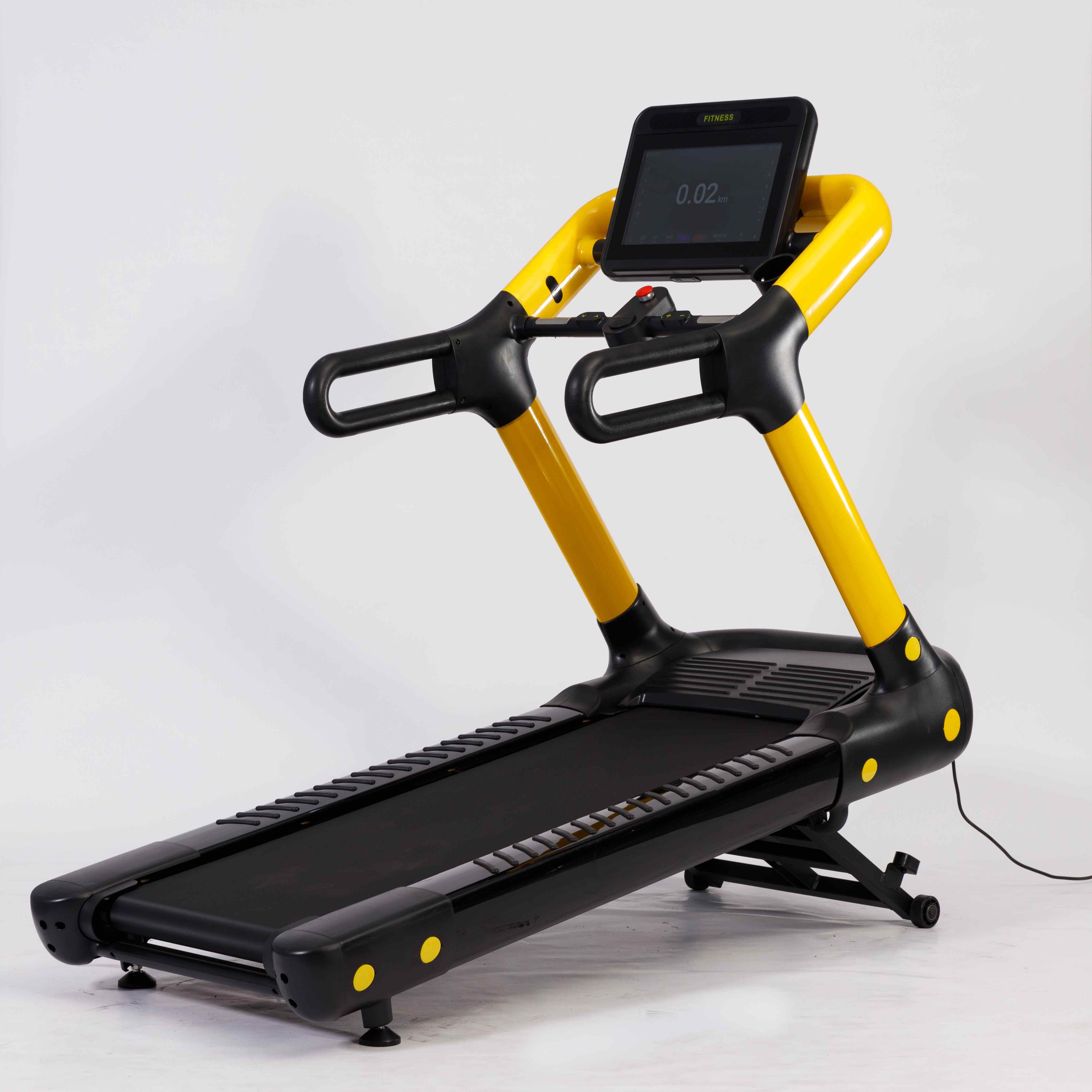
When tiptoeing through a sleeping home, the last thing you need is a blender that roars or a fan that rattles. True quiet motors are engineered with precision bearings and brushed or brushless designs that shave off unnecessary noise at the source. It’s not just about decibels—it’s about how the sound travels through walls and floors. A good motor almost vanishes into the background, letting you move freely without worrying about a sudden groan waking someone in the next room.
The difference often lies in the details: balanced rotors, insulated housings, and rubber mounting that absorbs vibration before it can spread. Some motors are designed to hum at frequencies less likely to carry, so the minimal sound that remains feels more like a soft breeze than a mechanical drone. It’s the kind of engineering you don’t notice until you realize you’ve used an appliance at midnight and nobody stirred.
These motors aren’t limited to high-end gadgets, either. You can find them in everyday items—ceiling fans, air purifiers, even coffee grinders—once you know what to listen for. The quietest ones often carry a simpler build, fewer moving parts, and a focus on smooth operation over sheer power. In a hushed house, that trade-off feels like a small luxury, one that preserves the peace while life keeps humming along.
Cushioning Systems to Save Your Joints
The silent toll of repeated impact doesn't announce itself with a bang — it shows up years later, in the stubborn ache of a knee that no longer wants to bend as deeply, or in a lower back that stiffens after a simple jog. That's where intelligent cushioning steps in, not as a soft squishy afterthought, but as a core design philosophy that manages forces before they travel up your kinetic chain. By tuning material responsiveness and geometry within the midsole, modern systems convert abrupt landings into smooth, elongated loading patterns, buying your cartilage precious milliseconds to absorb shock without deformation. The real magic isn't just in the material's softness, but in its ability to recover shape instantly, ensuring that every stride feels identical — from the first mile to the last.
What separates generic padding from genuinely protective cushioning is how it collaborates with your natural biomechanics instead of overriding them. Overly plush setups can mute the ground too much, short-circuiting your foot's stabilising reflexes and shifting stress to ankles and hips. Adaptive cushioning avoids this trap by stiffening where you need guidance and yielding where you need relief, often through dual-density foams or composite plates that work asymmetrically. A lateral crash pad might collapse to decelerate your foot strike, while a firmer medial post resists excessive inward roll. The result is less joint torque, without the sensation of running on marshmallows — your foot stays connected, your joints stay protected, and the surface beneath you feels predictably springy rather than unpredictably gushy.
Perhaps the most overlooked aspect of joint preservation is the cumulative effect of tiny, barely perceptible vibrations that travel through bone and connective tissue. High-frequency chatter on hard surfaces can fatigue articular cartilage over time even if you never experience acute pain. Premium cushioning systems now incorporate tuned dampening layers — not just to absorb the vertical load, but to scatter those high-frequency oscillations before they reach your tibia and spine. When you combine this with strategic rocker geometries that roll your foot through the gait cycle without forcing additional joint articulation, you get a system that protects not by isolating you from the ground, but by filtering out the destructive signals while preserving the sensory feedback your brain needs to move efficiently. It's a subtle difference you'll notice most in how your body feels the morning after a long run — less like it needs to recover, and more like it's ready to go again.
Smart Features That Actually Matter
Most gadgets come loaded with features that sound impressive on paper but fade into irrelevance within days. What truly matters are the ones that quietly integrate into daily routines, saving you from minor annoyances you didn’t even realize you tolerated. Think of a phone that learns your charging patterns to preserve battery health, or an app that surfaces the right information at the exact moment you need it—without any manual sorting.
Practical intelligence shows up in subtle ways: a camera that automatically adjusts settings based on the scene, or notifications that prioritize themselves so you’re not drowning in alerts. These aren’t flashy; they just work. For instance, a keyboard that adapts to your typing style over time, reducing errors without you noticing the adjustment. That’s the hallmark of a feature worth having—it solves a problem so cleanly that you forget the problem ever existed.
The best part? You rarely have to configure anything. These features operate in the background, using contextual cues to deliver assistance when it counts. When your device suggests leaving early for an appointment because of traffic, or dims the screen at night to match ambient lighting, it’s not showing off—it’s simply making your day smoother. That’s the kind of innovation that sticks.
Folding Designs for Tiny Apartments
Folding designs are nothing short of a game-changer for tiny apartments, where every square inch has to earn its keep. Rather than fighting the limited floor plan, these clever pieces let you reshape your space on a whim—walls become desks, beds vanish into cabinets, and dining tables fold away after dinner. The beauty lies in the movement itself: a well-engineered fold doesn’t just hide things; it lets the room breathe and adapt throughout the day, making the same four walls feel like a studio, a home office, and a gathering spot all at once.
What sets apart a thoughtful folding design from a clunky afterthought is how effortlessly it blends into daily life. The best examples feel almost invisible when stowed, with flush panels, soft-close hinges, and materials that match the rest of the room. Look for pieces that tackle more than one function—a drop-leaf console that doubles as a dinner table, or a fold-down desk with built-in storage cubbies. When you pull it open, it should feel solid and intentional, not like a compromise. And when it’s folded away, the empty space should invite you to move freely, not remind you of what’s missing.
Don’t underestimate the emotional lift that comes from a room that can change with you. In a small home, clutter and cramped quarters can weigh on your mood, but folding designs offer a sense of control. You can tuck away the workday and make room for a yoga mat, hide the guest bed and reclaim your living area, or simply clear surfaces to let natural light flow. It’s about turning constraints into possibilities—no remodel required.
Budget Picks That Don’t Feel Cheap
It’s easy to equate low prices with flimsy materials or lackluster design, but hidden among the clearance racks are pieces that look far more luxurious than their price tag suggests. The trick often lies in small details—brushed metal accents instead of shiny plastic, fabric that mimics linen rather than stiff synthetics, or a matte finish that feels sleek and understated. These items aren’t trying too hard; they simply get the fundamentals right, making them blend seamlessly with pricier counterparts.
What sets these budget picks apart is a focus on timeless style rather than chasing trends. A well-cut ceramic planter, for instance, can elevate a room just as effectively as a designer version, while a throw pillow with subtle piping adds richness without the guilt of overspending. The real pleasure comes from knowing you’ve sidestepped the markup without sacrificing the sense of quality that makes a space feel layered and personal.
FAQ
Focus on motor power, belt size, cushioning, and durability. A 3.0 CHP motor works well for runners, while 2.0-2.5 CHP suits walkers. Check the weight capacity and warranty — they often reflect build quality.
Look for a folding model with a compact footprint and wheels. Measure your floor space and ceiling height first. Some treadmills fold flat or vertically; you might even slide one under a standing desk or bed.
Absolutely. Mid-range models from brands like Horizon or Sole often deliver solid performance. You'll sacrifice some screen size and extra cushioning compared to high-end ones, but the core function stays dependable.
It varies. Belt-drive motors are quieter than older chain-driven ones. If you live in an apartment, check the decibel rating and consider a mat underneath. Early morning runs might still be noticeable, so test if possible.
Lubricate the belt every 3-6 months, keep it clean from dust and debris, and center the belt if it drifts. Wiping down after use prevents sweat corrosion. Most manuals have clear DIY instructions.
Good ones are engineered to be just as stable. The locking mechanism matters most — hydraulic assist fold-up feels secure. But ultra-budget folders can feel flimsy, so don't compromise on frame quality.
Not exactly, but modern cushioning systems get close while reducing joint impact. Some let you adjust firmness. It's a trade-off: more predictable surface but less wind resistance. A slight incline simulates outdoor effort.
Heart rate monitoring, incline and speed presets, and Bluetooth for training apps add real value. Giant touchscreens might go unused if you prefer your own tablet. Focus on what fits your routine — don't pay extra for gimmicks.
Conclusion
Finding the perfect treadmill for home use starts with an honest look at your living space and lifestyle. If you’re squeezed into a tiny apartment, a folding design isn’t just a nice extra—it’s a necessity. Look for models that tuck away vertically without a wrestling match every time. Equally crucial is the motor; a quiet belt drive system means you can squeeze in a pre-dawn run without waking the kids or annoying the neighbors. Pay attention to the deck, too—decent cushioning can be the difference between achy knees and years of comfortable mileage. And don’t assume flashy touchscreens equal smart features; what really matters is whether the treadmill pairs reliably with your favorite training apps or offers simple manual controls that don’t demand a tutorial.
You also don’t need to drain your bank account to get a solid machine. Today’s budget options ditch the cheap, rattly feel by using sturdy frames and streamlined consoles that focus on comfort over gimmicks. A well-cushioned belt and responsive speed changes can easily rival pricier models. Think about what you’ll actually use: if you mostly walk while watching shows, a basic, stable treadmill with a padded deck beats a loaded smart screen that gathers dust. The sweet spot blends practical space-saving design, a motor that hums rather than howls, and enough give in the running surface to protect your joints. That’s what transforms a gadget into a daily habit—and a smarter home fitness investment.
Contact Us
Contact Person: Owen Wu
Email: [email protected]
Tel/WhatsApp: 86-15376736259
Website: https://www.yingruisfit.com/