
3 Axis Milling Center Company Delivers Precision Machining Excellence
2026-10-12
When tight tolerances and repeatable surface finishes separate a good part from a rejected one, the equipment behind the cut matters more than ever. That’s where WINNRUI CNC comes in—a 3 axis milling center company that doesn’t just promise precision, but builds it into every spindle movement. In this post, we’ll look at how the right milling platform turns complex geometries into consistent, shop-floor realities.
Precision That Speaks in Microns
A micron is a thousandth of a millimeter, yet in high-stakes manufacturing it becomes the difference between a component that fits perfectly and one that fails under load. Precision at this scale does not announce itself with noise; it shows up as a mirror-smooth surface, a bearing that runs without vibration, or a lens that focuses light without distortion. Achieving such results means accounting for thermal expansion, tool wear, and even the pressure of a measuring probe.
This level of accuracy is not reserved for laboratories. It lives in the fuel injectors of modern engines, the hinges of surgical robots, and the alignment pins of semiconductor equipment. When every micron is controlled, assemblies go together without force, seals hold over millions of cycles, and motion becomes repeatable to the limit of human perception. Machines that can measure a micron can also correct for it, turning what was once an art into a repeatable process.
From Blueprint to Finished Part Without Compromise
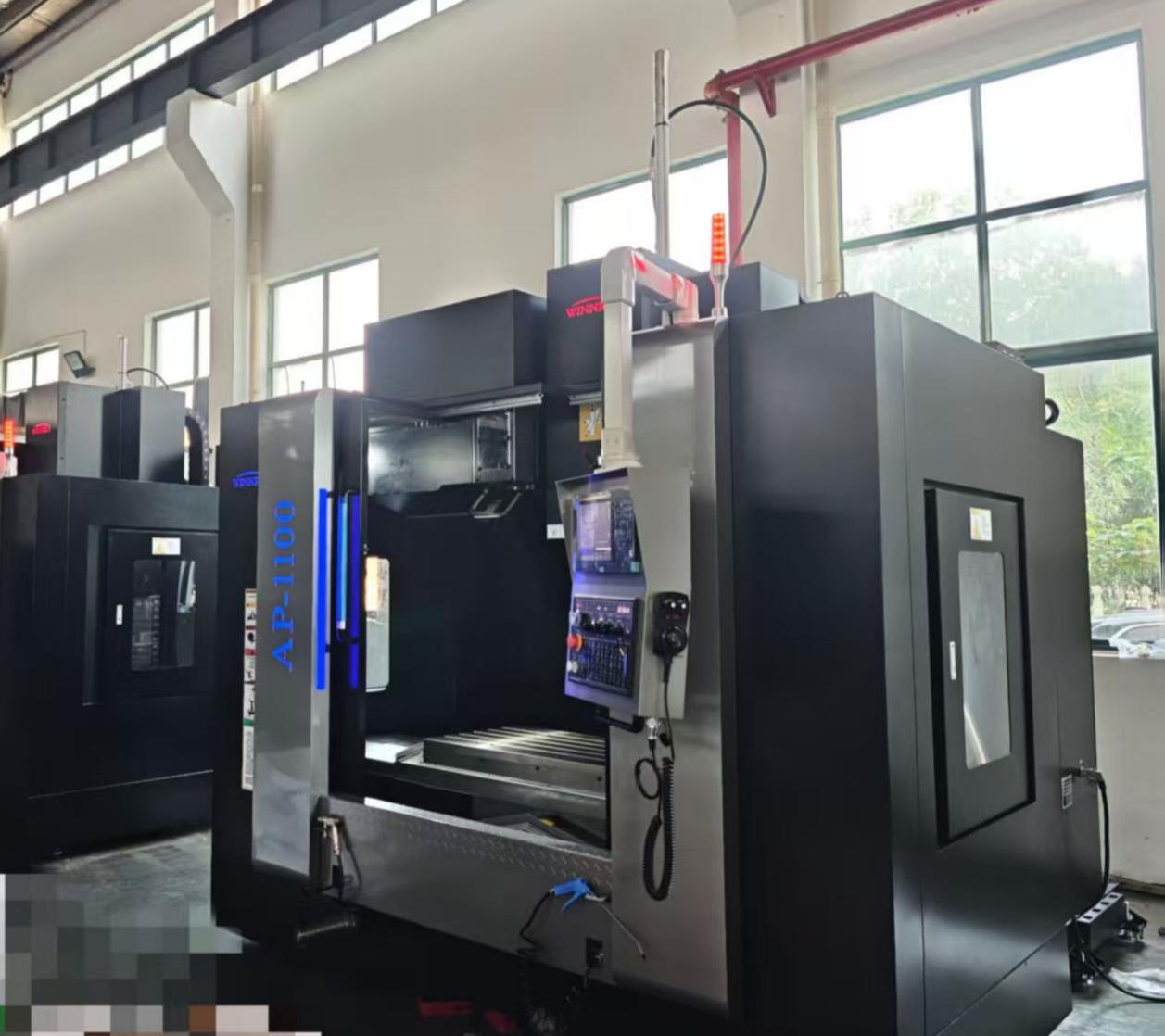
Every dimension on your drawing exists for a reason. We treat the blueprint as a contract, not a suggestion. From the first material selection to the final deburring pass, each step is measured against the original spec. Tolerances stack up in the real world, so we account for them before they become your problem. The goal is simple: the part you hold in your hand should match the part in your head, down to the last micron.
Where most shops see a trade-off between speed and precision, we see a process to be engineered. We sequence operations so that critical surfaces aren't touched twice, reducing the chance for error. Fixtures are built specifically for your geometry, not pulled from a generic shelf. When the machine finishes its cycle, the part is already close enough to final that handwork becomes a verification step, not a rescue mission.
The result is a finished component that drops into your assembly without persuasion. No filing, no shimming, no quiet acceptance of 'close enough.' You asked for a part that meets the print. We deliver a part that meets the print on the first try, every time, because compromise was never part of the plan.
Complex Geometries, Simplified
Complex geometries often intimidate designers and engineers, but simplification doesn't mean losing the essence of the form. Instead, it involves breaking down intricate shapes into manageable, intuitive patterns that preserve both function and visual interest. By focusing on the underlying logic of a structure—its curves, intersections, and volumes—we can translate overwhelming complexity into something approachable and elegant.
The key lies in prioritizing clarity over decoration. When a shape feels too busy, removing redundant elements or smoothing abrupt transitions can reveal a cleaner silhouette without sacrificing character. Think of how a sculptural facade gains strength from repeating a single, well-chosen geometric motif rather than layering multiple conflicting forms. This approach not only improves aesthetics but also simplifies manufacturing and assembly.
Ultimately, simplifying complex geometries is a process of distillation—finding the fewest visual and structural elements that still tell the full story. It rewards those who look beyond surface intricacy and see the simple relationships hidden within. The result is design that feels both sophisticated and effortlessly understandable.
Materials Expertise That Matches Your Toughest Specs
We don’t guess at material behavior—we’ve spent years cataloging how specific alloys, polymers, and composites actually perform under heat, load, chemical attack, and repeated cycling. When your spec calls for a yield strength above 1,200 MPa at 400°C, we don’t shrug and offer a generic stainless. We pull from a working library of candidate grades, then run comparative coupons to confirm which one holds tolerance after 10,000 hours.
That same rigor applies to non-metallics. Need a sealing material that stays elastic at -50°C while resisting aggressive hydraulic fluid? We’ll test compression set, volume swell, and low-temperature retraction side by side—not just rely on datasheet promises. If the first choice falls short, we iterate with you, adjusting filler loading or crosslink density until the numbers line up. You get a recommendation that’s already been stress-tested against your exact requirements, not a generic label.
Quality Control That Never Takes a Day Off
Around here, quality isn't a scheduled event or a Monday morning checklist. It's embedded in the rhythm of the work itself—every shift, every batch, every handoff. You won't find a team that pauses to “do quality” because the process itself is built to catch drift before it becomes a defect. The people on the floor don't clock in for inspection; they clock in with a mindset that every unit leaving the dock carries their name with it.
That kind of commitment doesn't come from a poster in the break room. It comes from giving people real ownership: raw materials are sampled before they ever hit the line, tolerances are checked against live data rather than yesterday's report, and when something looks off, anyone can stop the line without fear of slowing down a quota. The result is a system that corrects itself in the moment, not after a customer files a complaint.
We've learned that the best quality control is invisible—not a gate at the end, but a habit that never sleeps. Even on holidays, when the machines are quiet, the calibration logs are still being reviewed, the environmental sensors are still feeding data, and the next-shift handoff notes are already being written. It's not overkill; it's just what “always on” really means when you care about what ships out the door.
Your Partner in Accelerating Production Timelines
Meeting deadlines isn't just about moving faster—it's about removing the friction that slows your team down. We work alongside you to identify bottlenecks before they derail a milestone, then bring in the right tools and processes to keep every stage from prototype to final run on track.
Our approach pairs hands-on project management with deep manufacturing insight, so you're never left guessing where a part stands or why a schedule slipped. From material sourcing to last-mile assembly, we compress wait times without cutting corners on quality or compliance.
The result is a partner who treats your production calendar like their own—proactive, transparent, and relentlessly focused on getting your product out the door sooner, not just promising it.
FAQ
We routinely hit tolerances within ±0.0005 inches, and tighter when the part calls for it. The shop floor stays temperature-controlled so measurements don't drift with the weather.
Aluminum, stainless steel, titanium, and engineering plastics are our bread and butter, but we've also milled brass, copper alloys, and tool steels. If you have something unusual, send over the spec and we'll tell you straight if it's a good fit.
Not at all. We take prototype work and low-volume runs just as seriously as full production. The setup crew is used to switching between one-off parts and repeat orders without losing their rhythm.
In-process probing and a documented inspection routine cover every job. First-article reports, spot checks at the machine, and final CMM verification keep variation out of the equation. If a dimension starts to wander, we catch it before it reaches your dock.
A solid STEP or IGES file gets things moving fastest, but we've helped plenty of customers firm up a napkin sketch into a manufacturable design. Our engineers will point out undercuts, thin walls, or tight corners that might cause trouble before any metal is cut.
Medical device, aerospace, robotics, and automotive suppliers make up a good portion of the work. That said, we're not married to any single industry—if the part fits our machine envelope and requires honest precision, we'll take a look.
Most quotes go out within one business day. If the geometry is complex or the drawing needs clarification, someone will reach out with specific questions instead of hiding behind a slow portal.
Our main work envelope is about 40 x 20 x 20 inches, but we can fixture some longer parts in multiple setups. If your part is near the limit, send the dimensions and we'll confirm feasibility before quoting.
Conclusion
Precision machining isn’t just a capability here—it’s a measurable habit. Our three-axis milling center routinely holds tolerances in the single-digit micron range, which means every bore, pocket, and profile on your part matches the blueprint without hand-fettling or questionable workarounds. That level of control doesn’t happen by accident. It comes from disciplined toolpaths, thermal compensation, and a shop floor where complex geometries—deep cavities, angled features, tight corner radii—are handled as standard, not as exceptions. When your design calls for an unusual alloy or a hardened steel, we lean on decades of materials experience rather than guesswork, so the chip loads and speeds stay in the safe zone while surface finish and dimensional stability stay exactly where you need them.
The second half of the story is reliability. Quality checks run continuously, not just at final inspection, and every batch carries a documented trail of measurements from first article to last piece. That consistency lets us compress lead times without compressing quality. If your production schedule has shifted or a prototype needs to move faster, our three-axis process adapts quickly—fixturing changes are straightforward, programming is iterative, and there’s no long queue for specialized five-axis capacity when three axes can do the job cleanly. In short, you get a machining partner that treats your part as if it were its own: checked, challenged, and delivered on time, every time.
Contact Us
Contact Person: Tim
Email: [email protected]
Tel/WhatsApp: +86 15522553731
Website: https://www.winnrui-cnc.com/